
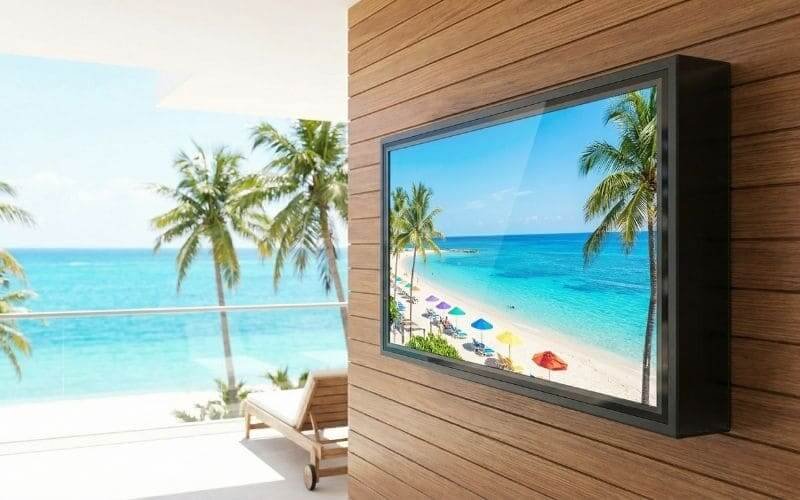
Deploying digital displays at beachfront properties, coastal resorts, or marina yacht clubs introduces some of the most severe environmental stressors found in the AV industry. Weatherproofing in these regions extends far beyond blocking standard rainfall; engineers must combat a continuous, invisible assault from aerosolized salt and high-humidity ocean breezes.
Deploying standard commercial displays or consumer TVs in coastal environments can lead to rapid hardware degradation if the display is left unprotected. To protect the hardware investment and ensure continuous uptime, properties should strongly consider utilizing an IP65-rated TV enclosure. This approach establishes a controlled, sealed micro-climate that physically isolates the internal electronics from salt-laden moisture while utilizing appropriate materials to withstand the coastal atmosphere.
Many homeowners and facility managers attempt to place standard indoor TVs under covered beach patios, assuming the roof will provide adequate protection. This is a critical engineering miscalculation. The ocean breeze carries microscopic salt crystals suspended in moisture, which aggressively attack exposed printed circuit boards (PCBs) and metal chassis. In this technical guide, we will analyze the chemistry of coastal corrosion and detail the physical barriers, thermal management strategies, and installation protocols required to build a reliable outdoor entertainment system on the coast.
Scope Note: This guide focuses on mitigating the effects of salt air, coastal humidity, and solar exposure for outdoor common-area and residential deployments within 5 miles of a saltwater coast.
How we evaluate coastal TV deployments at Outvion:
- Electrochemical mitigation against salt-laden moisture and galvanic corrosion
- Material selection to prevent exterior UV degradation and impact damage
- IP65 sealing compliance to block aerosolized particulates
- Coastal thermal management and active airflow sizing
Last Updated: Mar 14th. 2026 | Estimated Reading Time: 9 Minutes
By Smith Chen, Outdoor TV Enclosure Engineer at Outvion.
The Chemistry of Coastal Corrosion
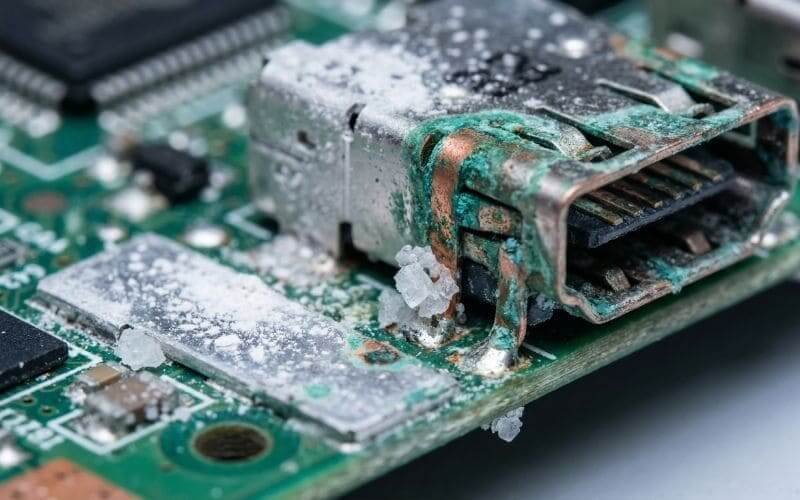
Salt air is not merely humid; it is a highly conductive electrolyte. When salt-laden morning dew condenses on the internal components of a standard indoor TV, it accelerates galvanic corrosion, rapidly destroying copper traces and increasing the risk of premature board failure.
To understand why standard indoor TVs fail so quickly near the ocean, we must examine the basic chemistry of corrosion. Metal degradation requires three elements: an anode, a cathode, and an electrolyte.
Saltwater as an Electrolyte
Standard water can cause short circuits, but salt water is exponentially more destructive.
-
The Chemical Mechanism: Sodium chloride (NaCl) dissolved in water creates a highly efficient electrolyte solution. When ocean waves crash, they aerosolize microscopic salt particles into the air. The coastal breeze carries this salt-laden moisture inland, permeating covered patios and semi-open cabanas.
-
The Condensation Cycle: A standard indoor TV relies on passive ventilation slots to cool its internal components. As the ambient coastal temperature drops at night, the humid, salty air drawn inside the TV reaches its dew point. This moisture condenses directly onto the logic boards, power supplies, and delicate ribbon cables.
-
Galvanic Degradation: The modern printed circuit board contains various dissimilar metals (copper traces, lead-free solder, gold-plated connectors). When the salty condensation coats these metals, it acts as the perfect electrolyte, triggering galvanic corrosion.
The Operational Impact
This electrochemical reaction is silent but devastating.
-
Electrical Bridging: The salt residue left behind after the water evaporates is highly conductive. When the TV is powered on, this salt residue can reduce insulation reliability and increase the risk of corrosion-related electrical failure over time.
-
Structural Dissolution: The anodic metals on the circuit board dissolve, leading to broken circuits, failing HDMI ports, and ultimately, an unresponsive display.
-
The Necessity of Isolation: Because this reaction occurs at the microscopic level inside the TV chassis, passive fabric covers or open wooden cabinets offer zero protection against the ambient coastal air exchange.
IP65 Defenses Against Salt-Laden Moisture
Effective coastal weatherproofing requires stopping the air exchange. An IP65-rated enclosure establishes a physical barrier that helps isolate the electronics, greatly reducing the amount of salt-laden moisture that can reach the internal electronics.
In coastal deployments, the term “weather-resistant” is insufficient. Professional engineers rely on the IEC 60529 Standard (Ingress Protection) to establish a verifiable physical boundary against the elements.
The Role of the Dust-Tight Standard (IP6X)
While “dust-tight” may sound irrelevant to ocean environments, it is a critical defense mechanism against aerosolized salt.
-
Blocking Aerosolized Particulates: Salt travels inland suspended in microscopic water droplets or as dry, aerosolized dust. The “6” in the IP65 rating dictates that the enclosure is evaluated to completely prevent the ingress of solid particulates under a vacuum test.
-
Reducing Electrolyte Exposure: By maintaining this sealed perimeter, the enclosure prevents the ambient, salt-heavy ocean breeze from freely circulating through the internal display’s chassis, greatly reducing the amount of salt-laden moisture that can reach the internal electronics.
Low-Pressure Water Resistance (IPX5)
The second digit addresses liquid ingress, which is equally vital for beachside properties.
-
Storm Protection: The “5” rating indicates protection against low-pressure water jets from any direction. This ensures the enclosure can survive heavy, wind-driven coastal rainstorms and sea spray under proper installation.
-
Maintenance Washdowns: More importantly, coastal maintenance requires frequent cleaning to remove the inevitable build-up of salt crust on exterior surfaces. The IP65 rating allows homeowners or housekeeping staff to gently rinse the exterior of the enclosure with fresh water to dissolve accumulated salt, without risking water ingress into the high-voltage electronics.
Coastal Threat Matrix & Defense Strategy
| Coastal Threat Vector | Mechanism of Hardware Damage | Outvion Defense Strategy |
| Aerosolized Sea Salt | Acts as an electrolyte; accelerates galvanic corrosion on PCBs. | IP6X (Dust-Tight) Seal. Reduces the interaction of ambient salt with internal components. |
| Coastal Humidity / Fog | Reaches dew point; creates internal condensation. | Physical Isolation. The sealed chassis helps stabilize the internal micro-climate. |
| Wind-Driven Rain | Water forced past side seams and standard input ports. | IPX5 (Water Jet Resistance). Interlocking bezel and sealed cable exits protect against spray. |
| Coastal Sun Exposure | Severe UV degradation of consumer plastics. | Sealed enclosure design with a polycarbonate front window. Provides 99% UV blocking. |
The Material Science: Polycarbonate in Marine Environments
The constant bombardment of salt, sand, and coastal sun quickly degrades standard materials. Outvion uses a polycarbonate front window with 99% UV blocking, which provides excellent durability against the elements and acts as a kinetic safety barrier.
Coastal weatherproofing extends beyond establishing a sealed gasket; the exterior materials themselves must be engineered to survive an abrasive and reactive atmosphere. Bare steel rusts, and standard consumer plastics quickly become brittle under the intense coastal sun.
UV Protection and Material Durability
To combat this, the Outvion enclosure utilizes an optical-grade polycarbonate front viewing window, paired with a treated rear housing.
-
Combating Photo-Oxidation: The coastal sun emits intense Ultraviolet (UV) radiation, which breaks the chemical bonds in standard consumer plastics (like the polystyrene used in standard TV bezels), causing them to yellow, haze, and crack.
-
The UV Shield: The polycarbonate front window features 99% UV blocking. This helps protect both the structural integrity of the shield itself and the fragile plastic bezel of the standard indoor TV housed behind it from solar degradation.
Kinetic Impact Resistance
Coastal regions frequently experience high-velocity winds that turn loose debris into projectiles.
-
The Brittleness of Glass: The viewing surface of a standard commercial display is constructed from highly brittle silicate glass. If struck by flying debris during a coastal storm, standard glass suffers catastrophic brittle failure.
-
The Sacrificial Layer: Polycarbonate exhibits extreme structural ductility. When struck, the material flexes elastically, absorbing the kinetic energy, and then rebounds. It functions as a sacrificial protective layer; it may suffer a localized scratch during a severe impact, but it resists shattering into dangerous shards, preserving the delicate LCD panel behind it.
The Decoupling Strategy for Coastal Properties
Pairing a standard indoor TV with an IP65 enclosure lowers initial CapEx and simplifies future replacements. Because coastal environments are extreme, retaining the heavy-duty enclosure while only swapping the affordable internal screen is a logical financial strategy.
When outfitting a beach house patio or a marina restaurant, consumers frequently evaluate dedicated “outdoor televisions.” While these all-in-one units are durable, they present a significant financial consideration in high-corrosion environments.
The Financial Burden of All-In-One Units
Dedicated outdoor TVs require a very large initial capital commitment.
-
The Fused Hardware Dilemma: Because the protective armor is permanently fused to the display panel, the entire expensive unit must be discarded when the internal screen eventually reaches the end of its lifecycle or if the coastal environment overcomes the unit’s seals.
-
High Replacement Costs: This means the ongoing maintenance of the outdoor space remains a high-cost endeavor, forcing operators to repurchase the expensive weatherproofing armor every time the screen needs an upgrade.
The Decoupling Advantage
The engineered alternative is the hardware decoupling strategy. By separating the rugged protective infrastructure from the digital display, homeowners and facility managers gain total control over their AV budget. The decoupling model becomes especially attractive for multi-unit coastal properties where replacement speed and budget predictability matter.
-
Optimized Pricing: For a 50–55″ setup, Outvion enclosure reference pricing typically starts in the mid-$400s for Basic configurations. When combined with a standard indoor TV, the total deployment cost is usually much lower than a dedicated outdoor TV setup.
-
Streamlined OpEx: Furthermore, when the internal display eventually requires replacement, the maintenance protocol is remarkably efficient. You simply unlock the enclosure bezel and install a new, inexpensive screen. This shifts the ongoing maintenance from a high-cost replacement to a predictable upgrade, which is a critical advantage in relentless coastal climates.
Coastal Deployment Options & Financial Modeling
| Deployment Strategy | Initial CapEx Burden | Weatherproofing Mechanism | Long-Term Replacement Cost |
| Standard Indoor TV | Low | None (High failure rate on the coast) | High (Requires constant re-purchasing due to corrosion) |
| Dedicated Outdoor TV | Very High | Integrated sealed chassis | Very High (Requires replacing the entire expensive unit) |
| Enclosure Strategy | Moderate | IP65 Polycarbonate Barrier | Low (Replace affordable internal screen only when needed) |
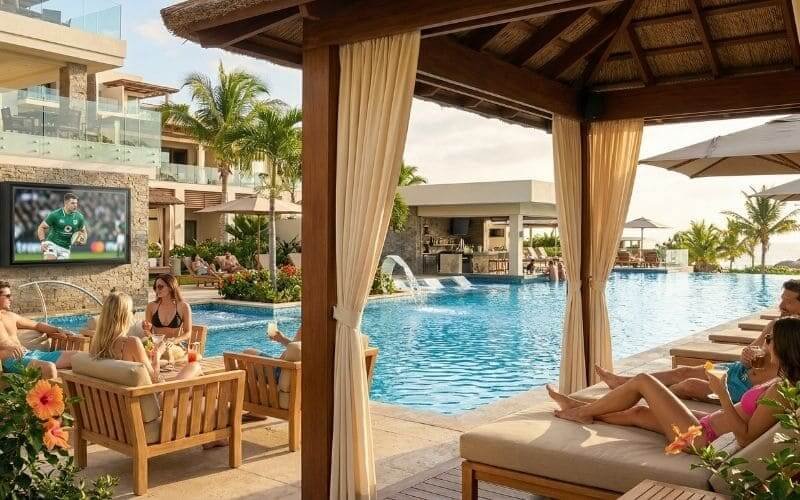
Coastal Solar Loading & Active Airflow Sizing
A completely sealed box creates a thermal trap. To prevent component failure, hotter or more sun-exposed coastal installations require ventilated Pro or Ultra versions sized for the heat load to actively remove waste heat from the enclosure cavity.
As established, an IP65 enclosure successfully helps isolate the display from external salt and moisture, but it introduces a secondary engineering challenge: thermal management. An operational television generates internal waste heat. If placed within a completely sealed box, this heat has no escape path.
The Coastal Greenhouse Effect
When an enclosure is installed outdoors, it is subjected to solar loading.
-
Heat Accumulation: Coastal properties often lack the deep shade provided by inland forests. The surfaces of the enclosure absorb solar radiation, transferring that heat to the internal air volume.
-
Hardware Strain: Without an engineered thermal management strategy, the internal temperature will rapidly exceed the safe operational threshold of the display. This can cause display darkening, image distortion, unexpected shutdown, or permanent panel stress.
Active Ventilation Requirements
To combat elevated thermal loads, the installation must utilize active ventilation to stabilize the micro-climate.
-
Evaluating the Site: In locations protected from prolonged direct afternoon sun (such as deep covered patios), lighter-duty configurations may be sufficient. However, hotter or more sun-exposed sites should favor ventilated Pro or Ultra versions.
-
Fan Configuration Logic: The cooling capacity must scale with the physical volume of the enclosure. In the current Outvion line, ventilated configurations use 2 fans for 28–55″ models and 4 fans for 60″+ models.
-
Thermal Relief: Ventilated versions use active fan airflow that helps remove waste heat from the enclosure cavity, drawing cooler ambient air in and exhausting the heated air out, ensuring the internal components remain within safe operating parameters even during intense summer beach weather.
Coastal Thermal Management Matrix
| Coastal Installation Environment | Solar Exposure Level | Thermal Risk Assessment | Recommended Ventilation Approach |
| Deep Covered Lanai / Patio | Minimal direct sunlight | Low Risk | Lighter-duty configurations may be sufficient. |
| Standard Open Deck | Partial afternoon sun | Moderate Risk | Ventilated configurations (2 fans for 28–55″). |
| Unshaded Beachfront / Marina | Intense, direct radiation | High Risk | Ventilated Pro or Ultra versions (4 fans for 60″+). |
Coastal Installation & Maintenance SOPs
Coastal installations require appropriate corrosion-resistant hardware, strict cable gland sealing, and proper drip loops. Routine exterior washdowns with fresh water are necessary to prevent heavy salt crust buildup and maintain optical clarity.
Deploying an IP65 enclosure provides a robust physical defense, but the integrity of that defense relies entirely on proper installation protocols adapted specifically for the marine environment.
Marine-Grade Structural Anchoring
The mechanical bond between the wall mount and your home is subjected to high coastal winds and a highly corrosive atmosphere.
-
Hardware Selection: Never use standard zinc-plated indoor lag bolts on a coastal property. The salt air will rapidly rust the fasteners.
-
Best Practices: Use corrosion-resistant exterior hardware appropriate for coastal installations, with marine-grade stainless often preferred in harsher salt-air environments to support long-term structural integrity.
Cable Routing and Drip Loops
The physical entry point into the enclosure must be tightly sealed.
-
Compression Sealing: Outvion utilizes specialized foam blocks or compression glands at the bottom exit points. During final assembly, technicians must route all cables neatly through these pathways and ensure the grommets are tightly compressed. Dust, humidity, and salt spray can bypass the primary seal through the cable exit if a gap is left open.
-
The Drip Loop Technique: Saltwater is highly conductive. If a power cord runs straight from the bottom of the enclosure into a wall outlet, rainwater or heavy dew will ride that cable directly into the electrical socket. Installers must implement a “Drip Loop”—a slack, U-shaped loop of cable hanging below the level of the wall outlet. Gravity forces the condensation to drip harmlessly off onto the ground.
Coastal Housekeeping (Washing the Enclosure)
Ambient salt spray will eventually dry on the exterior of the enclosure, leaving a cloudy, abrasive white crust.
-
Routine Cleaning: To maintain optical clarity and prevent the salt crust from accumulating around the fan ports, the exterior of the enclosure should be periodically rinsed with a gentle spray of fresh water. Cleaning frequency depends on distance from the coast, wind exposure, and how much direct salt spray reaches the installation.
-
Safe Protocols: Cleaning should be performed exclusively with mild, non-abrasive dish soap, warm water, and clean microfiber cloths. Never wipe a dry, salt-crusted screen with a dry cloth, as the crystallized salt acts like sandpaper and will introduce micro-scratches to the shield.
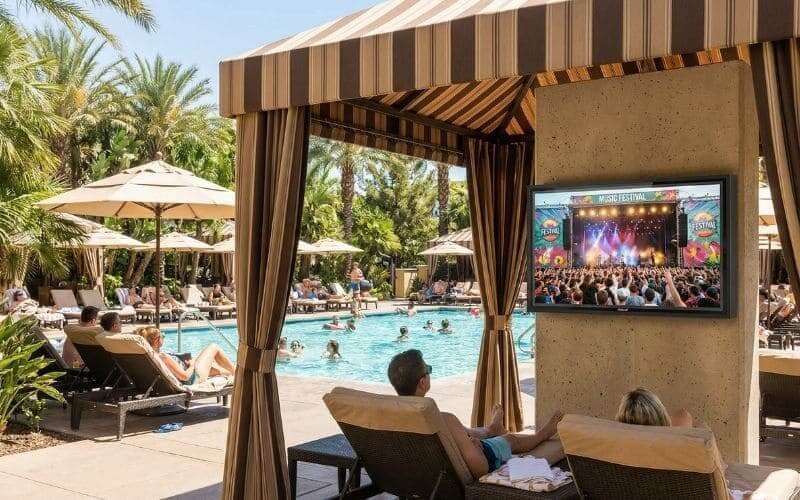
Conclusion: Engineering Reliable Coastal Entertainment
Weatherproofing a standard indoor TV for a beachfront property or marina is an exercise in applied chemistry and physical isolation. It cannot be achieved safely with improvised wood cabinets or breathable fabric covers, which actively trap conductive electrolytes against sensitive logic boards.
By utilizing an engineered IP65-rated physical barrier constructed with an optical-grade polycarbonate front window, you isolate sensitive electronics from the primary threats of aerosolized salt, galvanic corrosion, and intense UV degradation. By matching the active ventilation to your patio’s thermal load, utilizing appropriate corrosion-resistant fasteners, and implementing strict cable sealing protocols, you create a reliable outdoor entertainment space.
The decoupling strategy provides the final advantage, ensuring that when the internal screen eventually requires upgrading, your heavy-duty infrastructure remains securely on the wall, successfully defying the coastal elements.
Coastal TV Protection FAQ
1. Is a covered patio enough near the ocean?
No. While a roof protects against direct vertical rain, it does not stop the coastal breeze. Aerosolized salt and humidity travel laterally on the wind and will permeate a covered patio. At night, this humid salt air condenses directly onto the cold internal components of an unprotected TV, leading to rapid corrosion regardless of the roof above it.
2. Will the TV last forever inside the enclosure on the coast?
No electronics last forever, especially in a marine environment. However, the enclosure drastically reduces the exposure of the internal TV to aerosolized salt and moisture, significantly extending the lifespan of the standard indoor TV compared to leaving it unprotected or using a fabric cover.
3. Can I just build a wooden cabinet for my beach house TV?
Wood can absorb moisture, warp over time, and usually lacks the sealing and ventilation control required for outdoor electronics. In a coastal environment, the humid, salty air will easily bypass the wooden joints, accelerating the corrosion of the TV inside.
4. Do I need to seal the enclosure with silicone caulking?
No. Engineered enclosures use specialized internal gaskets designed to maintain the seal under mechanical compression. Adding aftermarket silicone to the exterior can block intended drainage pathways, fan openings, air paths, and ventilation components, causing moisture retention and severe overheating.
5. How quickly can a failed screen be swapped?
The decoupling strategy allows maintenance to unlock the bezel and swap the internal display with substantially less downtime because the enclosure remains installed. It is usually much faster and less expensive than uninstalling, shipping, and replacing a full all-in-one outdoor TV unit.
Recommended Technical Reading & Resources
To further understand the engineering standards and chemistry discussed in this guide, we recommend reviewing the following authoritative resources:
-
Corrosion Chemistry: AMPP (Association for Materials Protection and Performance)
-
Industry resources detailing the mechanisms of galvanic corrosion and how saltwater acts as a conductive electrolyte on printed circuit boards.
-
-
Ingress Protection Standards: IEC 60529: IP Ratings Explained
-
The official international standard defining the rigorous testing methodologies for evaluating protection against dust, aerosolized particulates, and water ingress.
-
-
Material Durability: Material Science of Polycarbonate (ScienceDirect)
-
Academic resources detailing the modulus of elasticity, UV resistance, and chemical inertness of engineering thermoplastics used in marine environments.
-