
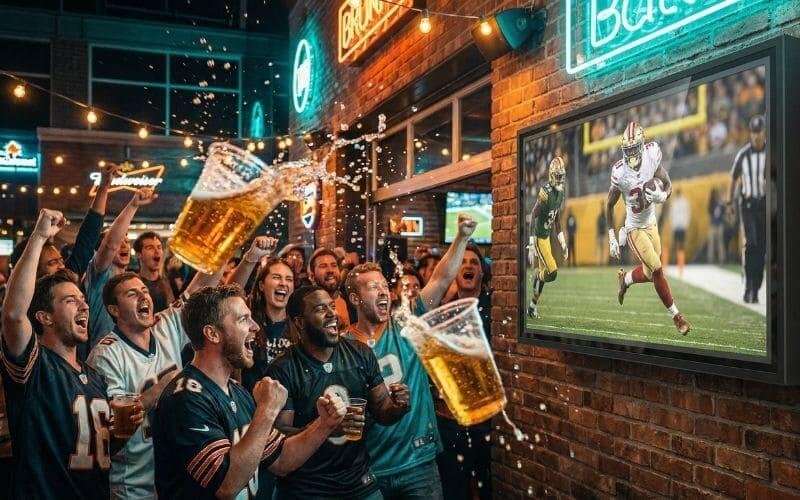
As an Outvion engineer evaluating public-space AV installations, I see firsthand that high-traffic nightclubs and sports bars present uniquely demanding environments. Displays here face much more than standard weather; they endure volatile crowds, physical impacts, and heavy airborne particulates.
BLUF: Standard consumer televisions are highly vulnerable to the physical and environmental risks present in heavy-traffic hospitality venues. Accidental impacts can easily shatter unprotected screens, while airborne residues from indoor vaping and fog machines can accumulate on internal components, increasing maintenance burdens and the risk of thermal failure. To mitigate these risks, operators should use an IP65-rated TV enclosure with a polycarbonate front window and lockable access options for public-facing installations. These systems act as a protective barrier, offering critical impact resistance, isolating the screens from dirty venue air, and providing physical locks to deter tampering and unauthorized access.
Placing fragile, open-vented electronics in high-tampering zones and hoping patrons avoid them is not a viable strategy. In this guide, we analyze the specific threats your AV equipment faces, the material science behind protective barriers, and the operational procedures required to secure your hardware.
How we evaluate bar/nightclub TV protection at Outvion:
- Impact exposure in public-facing installs
Access control for ports and controls - Cable-exit sealing and dust ingress risk
- Cleaning compatibility for polycarbonate front windows
Last Updated: Jan 4th. 2025 | Estimated Reading Time: 10 Minutes
By Smith Chen, Outdoor TV Enclosure Engineer at Outvion, specializing in bar, patio, and public-space TV protection.
The Projectile Problem: Understanding Impact Resistance
Standard television screens are manufactured with thin glass or fragile plastics that easily shatter upon impact, creating safety hazards and resulting in total equipment loss. Outvion enclosures mitigate this by utilizing an optical-grade polycarbonate front shield, which is engineered to flex and absorb kinetic energy, acting as a sacrificial protective layer between venue hazards and the digital display.
In any venue where alcohol is served and large crowds gather, physical impacts are a statistical inevitability. The environment is dynamic. A patron might accidentally knock over a heavy glass mug, a pool cue might slip during a game, or staff might inadvertently bump the wall while moving heavy kegs or furniture.
The Fragility of Standard Displays
When a solid object strikes a naked television screen, the result is highly predictable due to the materials used:
-
Low Impact Resistance: Consumer LCD and OLED panels are manufactured with thin layers of glass and delicate substrates possessing virtually zero ductility.
-
Catastrophic Failure: When subjected to sudden kinetic force, rigid glass cannot disperse the energy; it simply shatters, destroying the display immediately.
-
Secondary Hazards: This failure creates a significant secondary hazard: sharp glass shards falling into a public space, which presents a severe liability for venue management.
The Material Science of Polycarbonate
To effectively protect displays in public-facing AV installs, engineers do not use standard glass or basic acrylics (PMMA/Plexiglass).
-
The Acrylic Limitation: While acrylic offers excellent optical clarity and weatherability, it remains a relatively brittle polymer that can splinter or crack under sharp, focused impacts.
-
The Polycarbonate Solution: Professional protective barriers, including Outvion enclosures, utilize Polycarbonate (PC) for the front viewing window. Polycarbonate is an advanced thermoplastic polymer known in the engineering community for its exceptionally high impact strength and ductility.
-
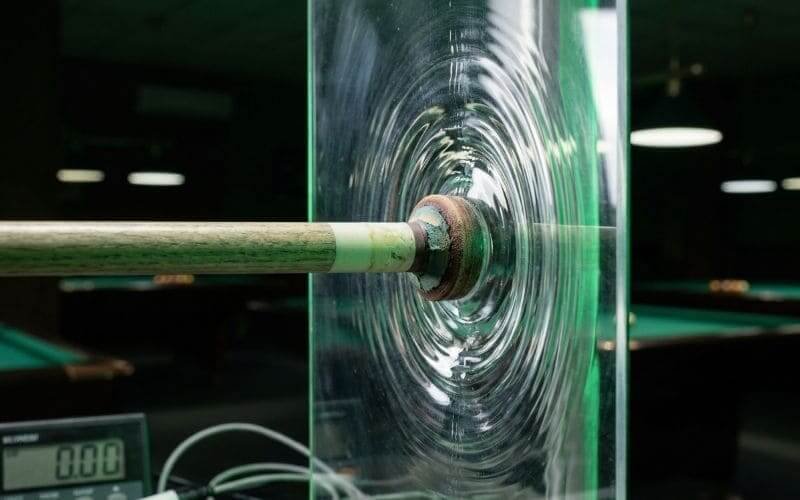
Kinetic Dispersion: When a heavy, blunt object strikes a polycarbonate shield, it possesses the molecular ability to yield and flex inward. It absorbs the kinetic energy of the impact, disperses that stress across the wider surface area of the shield, and physically repels the object, preventing the shockwave from transferring directly to the fragile television screen.
Front Window Material Comparison in High-Impact Venues
| Material Type | Primary Characteristic | Reaction to Heavy Kinetic Impact | Venue Safety Profile |
| Consumer Glass | Rigid, highly scratch-resistant | Shatters instantly into sharp shards | High liability; requires immediate replacement |
| Acrylic (Plexiglass) | Excellent optical clarity, brittle | Prone to splintering or cracking | Moderate risk; can leave jagged edges |
| Polycarbonate (PC) | High ductility, extreme impact strength | Yields and flexes; absorbs kinetic energy | High safety; acts as a sacrificial barrier |
Managing Engineering Expectations
It is critical to manage expectations regarding protective barriers. No transparent material is entirely “indestructible” or “unbreakable.” The purpose of an Outvion enclosure is not to be a bomb-proof vault, but rather to serve as a robust physical barrier and a sacrificial layer.
If an individual subjects the polycarbonate shield to extreme, deliberate, and repeated force using a heavy, sharp instrument, the plastic can eventually scratch, craze (develop white stress lines), or crack. However, the engineering success lies in the failure mode: even if the polycarbonate shield cracks under severe, deliberate abuse, it typically remains in one piece. It successfully absorbs the catastrophic energy, sacrificing its own structural integrity to save the expensive commercial display behind it, and crucial to public safety, it prevents a shower of shattered glass.
Airborne Contaminants: The Threat to Internal Thermals
Indoor vaping and fog-heavy venues generate airborne particulates that can leave sticky residues on surfaces over time. When drawn into the open vents of standard TVs, this residue, combined with venue dust, increases the thermal load and maintenance burden on internal components. IP65 enclosures help isolate the TV from direct exposure to this dirty venue air.
While physical impacts are highly visible events, a more insidious threat to commercial AV equipment in nightclubs and bars is the venue’s air quality. The atmosphere in a busy, enclosed entertainment venue is significantly different from a standard living room. It frequently contains high concentrations of airborne particulates and chemical vapors.
The Problem with Open-Vent Cooling
Standard consumer and commercial televisions rely on passive convection or small internal fans to keep their printed circuit boards (PCBs) and power supplies cool. To facilitate this airflow, the rear chassis of the television is covered in open ventilation slats. In a typical home, these vents draw in relatively clean air. In a nightclub, these open vents actively draw in whatever particulates are suspended in the room.
Vape Residue and Theatrical Fog
Modern entertainment venues frequently deal with two specific airborne challenges:
-
Indoor Vaping: Public health and air quality studies indicate that indoor vaping releases aerosols containing propylene glycol, vegetable glycerin, and various flavoring compounds. Over time, these aerosols settle on indoor surfaces, leaving a fine, slightly sticky residue.
-
Fog Machines: Theatrical fog and haze machines are staples in nightclubs. It is important to note that not all fog fluids behave identically. Oil-based fog fluids are particularly prone to leaving significant staining and heavy residue on nearby surfaces. Glycol-based or water-based fluids generally leave minimal residue, but they still contribute to the overall density of ambient particulate matter in the air.
The Thermal Blanket Effect
When a naked television actively draws in air heavy with vape aerosol or fog machine particulates, a destructive cycle begins:
-
Condensation: Microscopic droplets condense onto the warm internal components of the motherboard.
-
The Tacky Film: Over months of continuous operation, this condensation bakes into a thin, tacky film on the circuitry.
-
Debris Accumulation: Standard venue dust, lint, and fabric fibers are drawn into the vents and stick to this tacky residue.
-
Thermal Suffocation: As this mixture accumulates, it creates a physical, insulating blanket over the electrolytic capacitors and heat sinks, preventing effective heat dissipation.
-
Eventual Failure: The television runs at increasingly higher internal temperatures, significantly increasing the maintenance burden and elevating the risk of premature component failure.
The IP65 Isolation Strategy
The most effective way to protect sensitive electronics from airborne contaminants is physical isolation. Outvion enclosures are engineered to meet the IP65 standard under proper installation conditions.
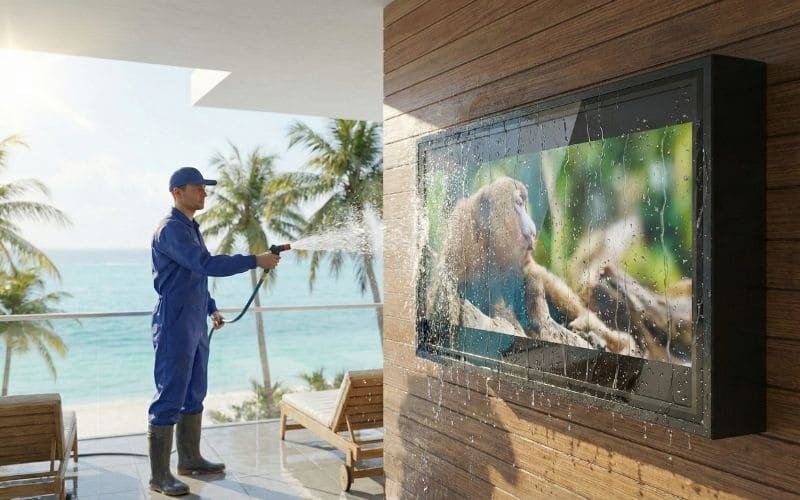
It is important to define this standard accurately: IP65 certification guarantees that the enclosure is “dust-tight” (complete protection against contact and ingress of solid objects and dust) and resistant to low-pressure water jets from any direction. While it is not a hermetically sealed “vapor-proof” chamber, the IP65 labyrinth seal, combined with properly compressed bottom cable exits, drastically reduces the internal TV’s direct exposure to dirty venue air. The sticky residues and dust settle on the smooth exterior of the polycarbonate shell—which your cleaning staff can easily wipe away—rather than accumulating on the vulnerable microchips inside.
Physical Security: Deterrence and Access Control
Unsecured displays on standard mounts are highly susceptible to crimes of opportunity and unauthorized tampering. Outvion enclosures act as a physical deterrent, utilizing locked front bezels and concealed mounting points to delay theft attempts and restrict public access to TV controls.
In the hospitality sector, equipment loss and unauthorized tampering are constant operational concerns. When managing a public space, security protocols must account for both after-hours vulnerabilities and operating-hours interference.
Mitigating Crimes of Opportunity
Equipment theft in bars and restaurants is rarely an elaborate heist; it is usually a crime of opportunity caused by a lapse in supervision, perhaps during the chaotic 2:00 AM closing procedures, or when a side patio is momentarily unattended.
-
The Vulnerability: A standard flat-screen television mounted on a basic, unsecured gravity bracket is incredibly vulnerable to this type of theft.
-
The Threat: An individual can remove the display very quickly from a basic unsecured mount during a lapse in supervision.
-
The Engineering Goal: In physical security engineering, the primary goal is often delay and deterrence. You aim to introduce enough friction into the environment that the attempt becomes too noisy, too difficult, or too time-consuming, prompting the individual to abandon the effort.
-
The Outvion Friction: Outvion enclosures provide this critical friction. The heavy-duty front bezel is secured to the wall-mounted backplane. Crucially, the system can be specified with anti-theft lock options and concealed mounting hardware.
-
Psychological Deterrent: Once locked, the internal mounting bolts that hold the entire unit to the wall structure are completely concealed and inaccessible. To remove the television, an individual would need significant time, heavy tools, and the willingness to generate substantial noise to pry the enclosure open—factors that act as a strong psychological and physical deterrent.
Access Control & Theft Deterrence Matrix
| Security Vector | Standard Unsecured TV Mount | Locked Outvion Enclosure |
| Mounting Hardware | Exposed brackets; gravity hooks | Fully encased inside the structural shell |
| Theft Delay | Minimal (Can be lifted in seconds) | High (Requires heavy tools to pry locks) |
| Input Port Access | Fully exposed to public | Concealed behind locked bezel |
| Manual Controls | Exposed (Volume, Power, Channels) | Denied (Patrons cannot reach buttons) |
Beyond outright theft, venue managers constantly battle unauthorized tampering during operating hours.
-
The Disruption: If a television’s physical buttons or input ports are exposed, patrons may attempt to change the channel, alter the volume, or plug in their own devices (such as smartphones or streaming sticks) via the HDMI or USB ports.
-
The Protection: By encasing the television within a locked Outvion enclosure, you establish strict access control. The locked exterior denies patrons any physical access to the display’s side buttons, power switches, or input ports. The broadcast remains exactly as management intended, ensuring a consistent and professional guest experience.
The Decoupling Strategy: Optimizing CapEx and OpEx
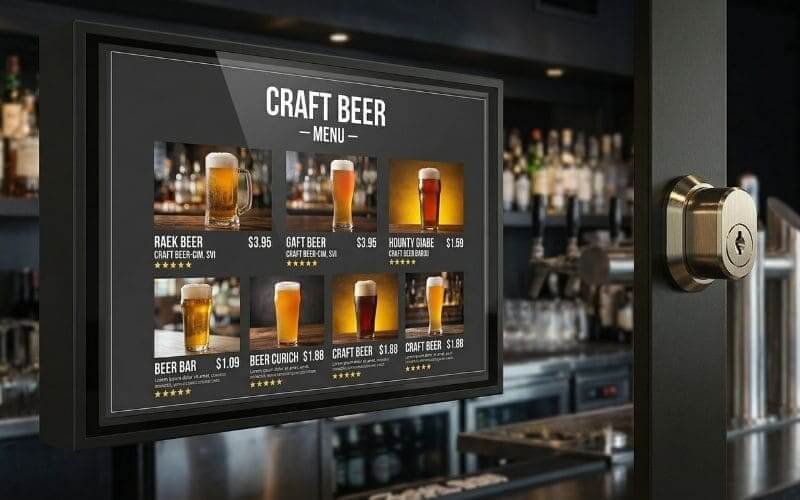
By decoupling the protective hardware (the enclosure) from the digital display (the TV), venues create a permanent protective asset. This significantly lowers initial CapEx compared to dedicated outdoor TVs and ensures that future screen replacements are faster, simpler, and far more cost-effective.
When outfitting a demanding hospitality environment, procurement directors must carefully evaluate the Total Cost of Ownership (TCO). A common mistake is merging the protective requirements and the digital display into a single, expensive unit by purchasing specialized “all-in-one” outdoor televisions.
While dedicated outdoor TVs are robust, they represent a significant Capital Expenditure (CapEx). Furthermore, they trap your budget in a depreciating technology cycle. If the internal screen of a $3,000 all-in-one unit fails after its warranty expires, or if it suffers a catastrophic, non-warrantied physical impact, the entire unit must be discarded and replaced.
The Financial Logic of Decoupling
The Outvion system utilizes a “Decoupling Strategy.” You treat the protective enclosure as a long-term architectural asset, and you treat the internal commercial television as an easily replaceable commodity.
This approach makes profound financial sense for commercial operators:
-
Base Pricing: For a 50–55″ setup, current U.S. reference pricing starts around $440 for Basic.
-
Thermal Upgrades: About $460 for Pro, and about $490 for Ultra models designed for higher thermal loads.
-
Integration Options: LED versions are priced higher depending on the configuration.
You pair this enclosure with a standard, high-brightness commercial indoor display. Your total initial investment is significantly lower than purchasing a dedicated $3,000 outdoor unit.
Operational Agility and Maintenance
The true value of this strategy becomes apparent during the maintenance lifecycle. In a high-traffic venue, displays will eventually reach the end of their operational lifespan due to heavy 16/7 usage.
When a screen eventually fails, the decoupling strategy provides maximum operational agility. You do not lose your protective investment. A maintenance technician simply unlocks the Outvion bezel, removes the failed television, and attaches a new commercial display to the internal VESA mount.
Replacement is significantly simpler and faster because the permanent enclosure remains safely installed on the wall, eliminating the need to drill new masonry holes or re-run electrical conduit. This approach minimizes system downtime and shifts future display upgrades from a massive CapEx burden to a manageable Operational Expenditure (OpEx).
Standard Operating Procedures: Security & Maintenance Checklist
To maximize the lifespan and effectiveness of the AV protection system, venue management must implement strict Standard Operating Procedures (SOPs), including controlled key management, proper cleaning protocols, and routine visual inspections.
Installing physical barriers is the first step; maintaining their integrity requires operational discipline. Venue management must establish and enforce Standard Operating Procedures (SOPs) for their security staff and cleaning crews to ensure the enclosures continue to protect the internal assets effectively.
1. Controlled Key Management
The security provided by the Outvion enclosure is highly dependent on controlling access to the locking mechanisms.
-
Protocol: Physical keys must be strictly managed. Only designated personnel, such as General Managers, Security Directors, or lead AV technicians, should possess keys.
-
Risk Mitigation: Keys should never be left on open bar counters or hung in unlocked, publicly accessible offices. Establishing a sign-out log for enclosure keys ensures accountability and prevents unauthorized access to the internal hardware.
2. Proper Cleaning Protocols for Polycarbonate
While polycarbonate is exceptionally highly impact-resistant, its surface is susceptible to micro-scratching and chemical hazing if maintained improperly. Nightclub cleaning crews often rely on strong industrial solvents, which can permanently damage the shield.
-
Protocol: To remove sticky spilled beverages, fingerprints, or settled vape residue, staff must use clean, soft microfiber cloths. The only recommended cleaning solution is a mild mixture of standard dish soap and warm water.
-
Prohibited Items: Cleaners must be explicitly instructed never to use abrasive scouring pads (like steel wool or heavy sponges), ammonia-based glass cleaners (like Windex), or harsh chemical solvents to preserve the optical clarity of the 99% UV-blocking front window.
3. Cable Exit Sealing
The IP65 integrity of the enclosure relies heavily on the correct installation of the bottom cable exit. Outvion units utilize compression foam or specialized glands to allow power and HDMI cables to pass through the shell.
-
Protocol: After any maintenance or initial installation, technicians must physically verify that the foam or rubber gland is tightly compressed around the cable bundle.
-
Risk Mitigation: If a gap is left open at the bottom exit, the enclosure is no longer dust-tight. Airborne particulates, fog machine residues, and ambient humidity will bypass the primary seals and enter the internal chassis.
4. Routine Visual Inspections
Preventative maintenance is the key to longevity in high-risk environments.
-
Protocol: Security or maintenance staff should incorporate the AV enclosures into their routine pre-shift or weekly walkthroughs.
-
Actionable Checks: Staff should physically verify that the side locks are fully engaged. They should also inspect the polycarbonate shield for deep gouges or severe crazing caused by unrecorded physical impacts. Identifying a compromised shield early allows management to order a replacement panel before the structural integrity is fully breached.
Standard mounts rely on gravity. You hang the TV like a picture frame. If a drunk patron stumbles and grabs the TV for support, the upward force can unhook the TV, bringing 80lbs of glass crashing down on top of them. That is a lawsuit that closes bars.
The Outvion system uses Security Rails. Once the TV is hooked onto the internal rail, a steel locking bar is engaged and tightened with security screws. The TV cannot move Up, Down, Left, or Right. A 250lb linebacker could hang off the enclosure, and while he might rip the anchors out of the drywall (see my note on bolting to studs!), the TV will not separate from the enclosure.
Summary & Final Verdict
To summarize the operational landscape, we can evaluate how the Outvion enclosure strategy directly addresses the specific, high-risk threats found in demanding hospitality environments.
The Hospitality AV Risk Assessment Matrix
| Venue Hazard | Risk to Unprotected / Standard TV | The Enclosure Defense Strategy |
| Physical Impacts (Thrown objects, bumps) | Screen glass shatters immediately; high liability risk; total hardware loss. | Polycarbonate shield flexes to absorb and disperse kinetic energy, acting as a sacrificial barrier. |
| Airborne Residue (Vape, Dust, Fog) | Particulates enter open vents; form thermal blanket on PCBs; elevate running temps. | IP65 certification helps isolate the internal TV from direct exposure to dirty venue air and dust. |
| Liquid Hazards (Spilled drinks, cleaning) | Liquids seep into bezels; corrode connections; cause immediate short circuits. | Dust-tight and splash-resistant shell repels liquids, simplifying safe exterior wipe-downs. |
| Crimes of Opportunity (Theft) | Lightweight TVs easily unhooked from standard mounts in seconds. | Lockable options secure the unit; concealed mounting delays and deters rapid theft attempts. |
| Unauthorized Tampering | Patrons alter volume, change channels, or access input ports. | Locked exterior denies physical access to side buttons, HDMI, and USB ports. |
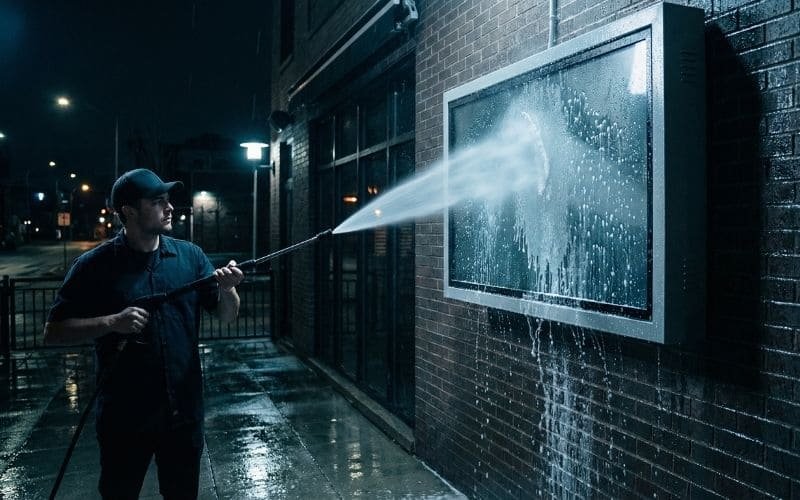
As an AV engineering consultant, my objective is to help venues reduce operational variables. Hanging fragile, unsecured commercial displays in a heavy-traffic, high-tampering venue introduces unnecessary financial and safety risks.
By implementing Outvion IP65 Enclosures, you establish a professional protective barrier for your public-facing AV installs. This strategy provides critical delay and deterrence against theft, absorbs accidental impacts, and significantly reduces the maintenance burden caused by airborne contaminants. It ensures that your visual entertainment systems remain reliable, long-term operational assets.
The Public-Space AV Protection FAQ
1. Is the Outvion enclosure completely unbreakable?
No. It is important to set realistic engineering expectations. While optical-grade polycarbonate is exceptionally tough and easily absorbs typical accidental impacts (such as a bumped chair or a tossed plastic cup) without shattering like glass, extreme, deliberate force with a heavy tool can scratch or crack it. It is engineered as a sacrificial layer to absorb impact energy, protecting the expensive TV behind it and preventing dangerous glass shards from falling into public spaces.
2. Will the enclosure protect against heavy fog machines and special effects?
Under proper installation, yes. The Outvion enclosure carries an IP65 rating, meaning it is dust-tight. This sealed design, particularly when the bottom cable exit is correctly compressed, helps isolate the internal television from direct exposure to the airborne particulates and sticky residues generated by heavy indoor vaping and theatrical fog machines, drastically reducing the internal cleaning burden.
3. Can patrons tamper with the TV controls or USB ports?
No, the enclosure is designed specifically to prevent this. The unit can be specified with keyed side locks that secure the front bezel. Once locked by management, patrons do not have direct physical access to the TV’s manual controls or input ports while the enclosure remains locked, ensuring your curated broadcast cannot be interrupted or altered by guests.
4. Does the polycarbonate window distort the lighting or lasers in the club?
The front shield is manufactured from optical-grade material designed for high transparency and features 99% UV blocking. However, any highly reflective, flat surface can reflect intense, direct club lighting or laser effects. To minimize distracting ambient reflections, we highly recommend utilizing the internal VESA mounting system to tilt the enclosed television slightly downward toward the audience.
5. How complicated is it to replace a television if it fails?
The decoupling strategy ensures that replacement is simpler and faster than dealing with a broken all-in-one outdoor television. Because the heavy Outvion enclosure remains permanently bolted to the wall, a maintenance technician simply unlocks the side bezel, unplugs the display, and swaps the commercial TV on the internal VESA mount. There is no need to drill new masonry holes or re-run conduit, minimizing disruption to your venue.
IX. Recommended Technical Reading & Resources
To further understand the engineering and commercial principles discussed in this guide, we recommend reviewing the following resources:
-
Plastics & Material Science: Polycarbonate vs. Acrylic: Impact Resistance (Curbell Plastics)
-
Why it matters: A technical breakdown of why polycarbonate yields and absorbs kinetic energy, making it the superior choice for high-impact environments compared to brittle acrylics.
-
-
Ingress Protection Standards: IEC 60529: Degrees of protection provided by enclosures (IP Code)
-
Why it matters: The official international engineering standard defining exactly what constitutes “dust-tight” and “water jet resistant” protection for commercial enclosures.
-